Laminate Flooring Buying Guide: How to Choose the Right Floor for Your Home
Laminate Flooring Buying Guide Key Takeaways
Laminate flooring comes in more variations than most people expect. Getting the right one for your space comes down to three decisions: waterproof or water-resistant, how thick, and what style. Here is what to know before you start comparing products.
- Waterproof and water-resistant laminate are not interchangeable. Waterproof laminate is engineered for kitchens, bathrooms, and basements, while water-resistant laminate handles everyday spills in drier rooms but is not designed for sustained moisture exposure.
- Thicker planks perform better underfoot and last longer in heavy-use areas. Planks in the 10mm to 12mm range offer better sound absorption, a more solid feel, and greater resistance to denting compared to thinner options.
- Laminate cannot be refinished. When the wear layer is gone, the floor needs to be replaced. Buying the right thickness and wear rating for your room upfront is the best way to extend the life of the floor.
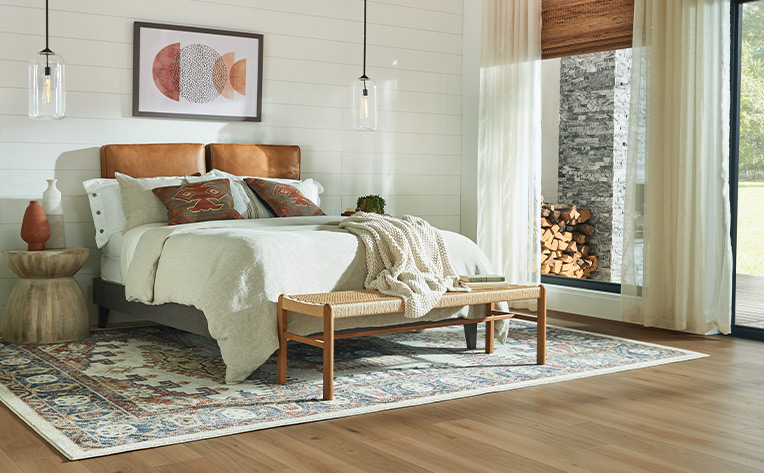
Laminate flooring delivers the look of hardwood, stone, or tile at a more accessible price point, with durability and easy maintenance that make it a practical choice for busy households. This guide covers the key buying decisions: waterproof vs. water-resistant, thickness, types, and where each option works best.
Shop Laminate Flooring
What Is Laminate Flooring?
Laminate flooring is a multi-layer composite product designed to replicate the appearance of hardwood, stone, or tile while offering consistent durability and easier maintenance. All laminate is built from four layers:
- The wear layer is a clear protective coating of aluminum oxide that resists fading, stains, scratches, and surface burns.
- The design layer contains a high-resolution photographic image of wood, stone, or tile and is what gives each product its visual character.
- The core layer is a high-density fiberboard (HDF) board that provides structural strength and resistance to indentations and moisture.
- The back layer is a stabilizing base that balances the plank and provides a secondary moisture barrier.
Want to understand how these layers are made? See our guide to waterproof vs. water-resistant flooring.
Waterproof vs. Water-Resistant Laminate
The most important distinction to understand when buying laminate is the difference between waterproof and water-resistant.
- Water-resistant laminate can handle everyday spills and damp mopping if cleaned up promptly. It is well suited to bedrooms, living rooms, hallways, and other low-moisture areas. It is not designed for rooms where water pools, splashes regularly, or humidity stays high.
- Waterproof laminate is engineered to withstand sustained moisture exposure. It's the right choice for kitchens, bathrooms, laundry rooms, and basements. The planks themselves will not absorb water, but proper installation including seam sealing is still important to prevent moisture from reaching the subfloor.
When in doubt, check the manufacturer's specification sheet and confirm the moisture rating before purchasing. Shop waterproof laminate flooring.
Types of Laminate Flooring
Laminate flooring falls into three main categories, each suited to different needs.
- Traditional laminate is the standard option for most residential spaces. It handles everyday foot traffic well and is available in the widest range of styles and price points. It is best suited to lower-moisture areas.
- Engineered laminate features a denser core construction that provides additional durability and moisture resistance compared to standard laminate. A good option for higher-traffic rooms or spaces where standard laminate might be borderline for moisture.
- Waterproof laminate is fully engineered to resist moisture at the plank level. It uses a rigid, sealed core and is the appropriate choice for any room where water exposure is likely. For more on how to evaluate which type fits your space, see our durable laminate options.
Thickness and Plank Options
Laminate flooring is typically available in thicknesses ranging from 6mm to 12mm. The right choice depends on your subfloor condition, the room's traffic level, and what you want the floor to feel like underfoot.
- 6mm to 8mm is the thinner end of the range. Suitable for lower-traffic rooms with a smooth, even subfloor. Less sound absorption underfoot.
- 10mm to 12mm is the better choice for high-traffic areas, rooms where you want a more solid feel underfoot, and spaces where the subfloor has minor imperfections. Thicker planks also provide better sound insulation.
Plank width and length also affect the finished look. Wider, longer planks create a more open, contemporary feel and work well in larger rooms. Narrower planks suit smaller spaces or more traditional aesthetics. For a full breakdown of how thickness affects performance, see our laminate thickness guide.
Texture, Finish, and Style
Laminate is available in a wide range of surface textures, finishes, and visual styles. Your choice here affects both the look of the floor and how it performs day to day.
Texture and Finish Options
- Smooth finish: Replicates polished wood or tile for a clean, contemporary look. Easier to wipe down but shows dust more readily.
- Embossed or textured finish: Adds surface detail that more closely resembles real wood grain. More forgiving of everyday wear marks.
- Hand-scraped or distressed finish: Designed to replicate the character of aged hardwood. Knots, variation, and surface texture give these options a warmer, more rustic appearance.
Style and Color
Laminate is available in a broad range of colors and species looks, from classic oak and maple to modern greys and whitewashed finishes, as well as stone and tile looks. If you want to see how a style looks in your space before you commit, order flooring samples delivered to your door.
Where to Use Laminate Flooring
Laminate is one of the more versatile flooring options, but the right type matters depending on where you are installing it.
- Living rooms and bedrooms: Water-resistant laminate works well in these spaces. Focus on thickness and style.
- Hallways and high-traffic areas: Choose a thicker plank (10mm or above) with a durable wear layer for better longevity.
- Kitchens: Waterproof laminate is the right choice. Spills and moisture are frequent, and standard laminate is not designed for this level of exposure.
- Bathrooms: Waterproof laminate only. Ensure proper installation with sealed seams.
- Basements: Waterproof laminate is recommended. Basements can have ground moisture even without visible water. Browse our basement laminate options.
Installing Laminate Flooring
Laminate installs as a floating floor using a click-lock system: planks snap together and sit above the subfloor without being glued or nailed down. This makes it one of the more accessible flooring types to install and allows for natural expansion and contraction with temperature and humidity changes.
The Importance of Installation Prep
A successful installation starts with the subfloor. It must be clean, level, and dry before any planks go down. An underlayment is laid first to provide a moisture barrier, sound absorption, and cushioning underfoot. Some laminate planks come with pre-attached underlayment for added convenience.
Ease of Installation
Because laminate floats above the subfloor, it can be installed over many existing floor surfaces. Installers leave a small expansion gap around the room's perimeter to allow for movement. Trim and transition pieces finish the edges for a clean result.
Professional Installation is Key
Professional installation ensures the subfloor is properly prepared, the expansion gaps are correct, and the warranty stays intact. Check out our Hard Surface Floor Care and Warranty Guide for guidance on keeping your floors performing well over the long term.
Next Steps
Now that you know what to look for, the only thing left is finding the floor that feels right for your home. As your friendly flooring experts, we're here to make that process as easy as possible.
Book a free, in-home estimate for access to personalized guidance and accurate measurements of your space before you commit to anything. Our experts will help you narrow down your options, match the right products to the right rooms, and build a plan that works for your timeline. Don't wait to schedule your estimate today and take the first step toward a home you'll love coming back to.
Get an Estimate
